Yes, small areas of mould on carpet may sometimes be treated, but removing the visible mould is only part of the solution. Moisture is usually the underlying cause, and mould can develop not only in the carpet fibres but also in the underlay beneath them. If the source of moisture remains, the mould and musty smell can return.
This is why dealing with the cause and drying the carpet properly are just as important as cleaning the visible area.
Why Does Mould Grow on Carpet?
Carpet can become a breeding ground for mould when moisture remains trapped for too long. Unlike hard flooring, carpet and underlay can absorb and retain water, creating conditions where mould can develop.
Common causes include:
- Spills that were not dried completely
- Leaking pipes or radiators
- Water coming in through windows or external walls
- Condensation and poor ventilation
- Damp subfloors
- Carpet that has been over-wetted during DIY cleaning
- Flooding or significant water damage
London homes can be particularly vulnerable where ventilation is limited or condensation regularly develops in bedrooms, bathrooms and rooms with little airflow.
The important point is that mould is usually a moisture problem first and a cleaning problem second. If the source is not addressed, cleaning the carpet alone is unlikely to provide a lasting solution.
How to Remove Mould from Carpet
If you have discovered a small patch of mould, avoid immediately soaking the carpet with cleaning products or large amounts of water.
Start by improving ventilation in the room and keeping people and pets away from the affected area while you assess the situation.
1. Find the Source of the Moisture
Before cleaning, try to establish why the carpet became damp.
Check nearby walls, windows, radiators and pipes for signs of leaks or condensation. If the carpet has recently been cleaned, consider whether it may simply not have dried properly.
If there is an active leak or damp coming from the building, cleaning the carpet will not solve the underlying problem.
For rented properties, it is also sensible to report suspected leaks or building-related damp to the landlord or letting agent rather than attempting to solve the cause yourself.
2. Avoid Soaking the Carpet
One of the biggest mistakes people make when dealing with mould is using too much water.
It may seem logical to thoroughly wash the affected area, but excessive moisture can penetrate into the underlay and make drying considerably more difficult.
The National Carpet Cleaners Association warns that DIY deep cleaning can leave carpets wet for too long, potentially creating conditions that encourage mould growth.
If you are dealing with an ordinary stain rather than mould, our guide to professional carpet cleaning in London explains how deeper carpet cleaning can be used for dirt, stains and odours.
3. Treat the Affected Area Carefully
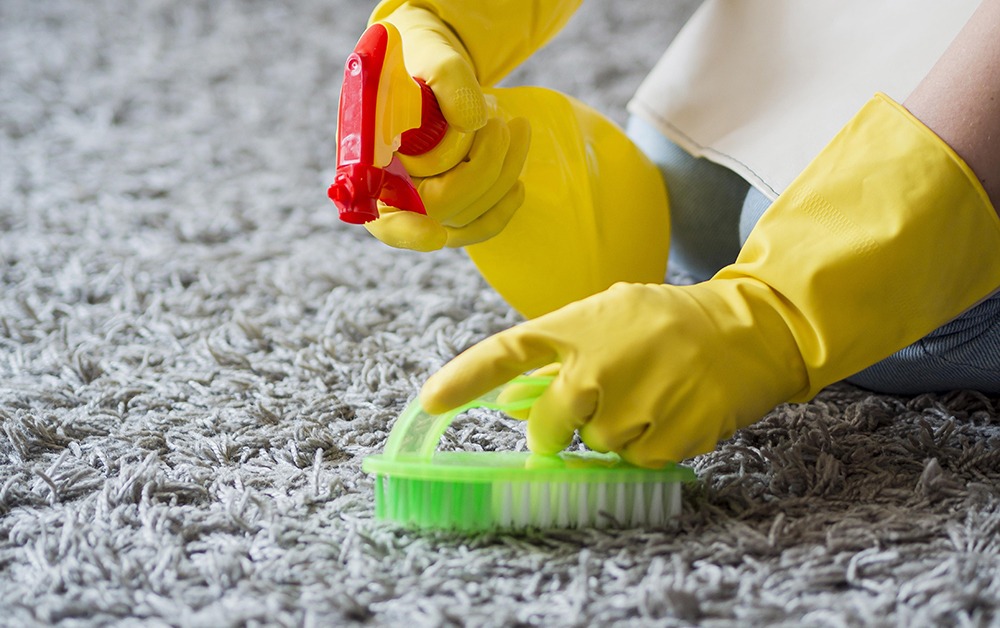
For a very small surface area, you can use a carpet-safe mould treatment according to the manufacturer’s instructions.
Always check the product is suitable for your particular carpet. Different fibres and dyes can react differently to cleaning chemicals, and an aggressive product can leave permanent discolouration.
Do not automatically reach for household bleach. The NCCA specifically advises against using bleach on carpets because it can damage the fibres and cause permanent staining.
If you are unsure about the carpet material or the appropriate treatment, professional advice is safer than experimenting with strong chemicals.
4. Dry the Carpet Thoroughly
Drying is one of the most important parts of mould treatment.
Increase airflow through the room and use suitable ventilation or dehumidification where possible. Do not simply close the room and leave the carpet damp.
Remember that the surface may feel dry while moisture remains deeper in the carpet or underlay.
This is one reason mould can sometimes appear to disappear and then return several days or weeks later.
What If the Mould Smell Remains?
A persistent musty smell is a warning sign that the problem may be deeper than the visible patch.
You may see only a small amount of mould while moisture or contamination remains underneath the carpet.
The UK Government’s guidance on damp and mould notes that a mould smell without visible mould can indicate growth behind or underneath surfaces, including the underside of carpets. It also warns that disturbing hidden mould can release spores into the air.
If the smell remains after surface cleaning and thorough drying, it is worth investigating the carpet, underlay and source of moisture rather than repeatedly treating the same patch.
Can Professional Carpet Cleaning Remove Mould?
Professional carpet cleaning can help with certain mould-affected carpets, particularly where the problem is limited and the carpet itself remains suitable for cleaning.
The correct cleaning method depends on the carpet fibres, construction, extent of contamination and amount of moisture involved.
Professional carpet cleaners may use methods such as:
- Hot water extraction
- Low-moisture cleaning
- Specialist spot treatment
- Professional extraction equipment
- Controlled drying techniques
- Dehumidification where appropriate
The National Carpet Cleaners Association explains that different carpet materials require different cleaning approaches. It also highlights that professional methods can help with mould, odours and allergens while reducing the risks associated with inappropriate DIY cleaning.
For London homeowners and tenants, this can be particularly useful when a carpet has developed a persistent mould smell, visible staining or contamination following a leak.
When Should You Call a Professional?
Not every small mould spot requires professional carpet cleaning. However, there are situations where calling an experienced cleaner makes much more sense than repeatedly trying household remedies.
Consider professional help when:
- The mould covers a larger area
- The mould keeps coming back
- There is a persistent musty smell
- The carpet or underlay has been heavily soaked
- There has been a leak or flooding
- You cannot identify the source of the moisture
- DIY cleaning has not solved the problem
- You are worried about damaging the carpet
- The carpet is expensive, delicate or made from natural fibres
For larger or persistent damp and mould problems, the Government recommends appropriate assessment and professional involvement, particularly where the source or extent of the problem is unclear.
Can You Prevent Mould from Coming Back?
Once the carpet has been cleaned, prevention is just as important as treatment.
The simplest strategy is to control moisture and improve airflow.
Keep rooms adequately ventilated, deal with spills quickly and avoid leaving carpets wet after cleaning. If condensation is a regular problem, improving ventilation and controlling indoor humidity can reduce the conditions mould needs to grow. Also pay attention to areas around windows, external walls and furniture where air circulation may be poor.
If you have recently had a carpet professionally cleaned, allow it to dry completely before placing furniture back or closing the room up.
When Cleaning May Not Be Enough
There are situations where cleaning the carpet is not necessarily the correct solution.
If mould has penetrated deeply into heavily contaminated carpet or underlay, or if the material has remained wet for a prolonged period, replacement may sometimes be necessary.
The Government’s damp and mould guidance specifically notes that absorbent materials such as carpets and soft furnishings may sometimes need to be discarded where mould cannot be completely removed. This is why a professional assessment can be useful before spending money on repeated cleaning attempts.
If the carpet is still salvageable, professional cleaning may restore it without replacement. If it is not, you avoid spending money on a treatment that cannot solve the underlying problem.
Professional Carpet Cleaning in London
Mould on carpet is not something to ignore, particularly when there is a persistent smell, recurring growth or evidence of moisture underneath the surface.
For a small, isolated problem, careful treatment and thorough drying may be enough. But if the mould keeps returning or the carpet has been significantly affected by water, professional assessment and cleaning can be the more practical option.
Keen Clean provides professional carpet cleaning in London for homes and properties where carpets need more than a routine vacuum or surface clean.
If mould has appeared alongside a wider damp or water problem, deal with the source first. Cleaning without fixing the moisture issue simply gives the problem an opportunity to return.
Frequently Asked Questions
Q: Can mould be completely removed from carpet?
A: Small areas of mould may sometimes be treated successfully if the source of moisture is fixed and the carpet can be cleaned and dried properly. However, deeply contaminated carpet or underlay may not always be salvageable. A professional assessment can help determine whether cleaning or replacement is the more appropriate option.
Q: Is it safe to use bleach on mouldy carpet?
A: Bleach is generally not a good choice for carpet because it can damage fibres and permanently discolour the material. The National Carpet Cleaners Association specifically advises against using bleach on carpets. Use a product designed for the particular carpet material or seek professional advice before applying strong chemicals.
Q: When should I call a professional for mouldy carpet?
A: Professional help is recommended when mould covers a larger area, keeps returning, produces a persistent musty smell or follows significant water damage. It is also worthwhile if you are unsure how to treat the carpet without damaging it or suspect that mould has reached the underlay.
Final Thoughts
Learning how to remove mould from carpet is useful, but successful mould treatment is not simply about removing what you can see.
The key is to identify the moisture source, avoid over-wetting the carpet, use carpet-safe products and make sure the area dries properly. If mould is widespread, keeps returning or appears to have affected the underlay, professional help is often the safer and more effective option.
A carpet that smells musty after cleaning should not simply be covered with air freshener. The smell may be telling you that moisture or mould is still present deeper in the flooring.